




Cantilever Rack Load Notices: Keep Ratings Matched to the Installed Row
Staging preview.
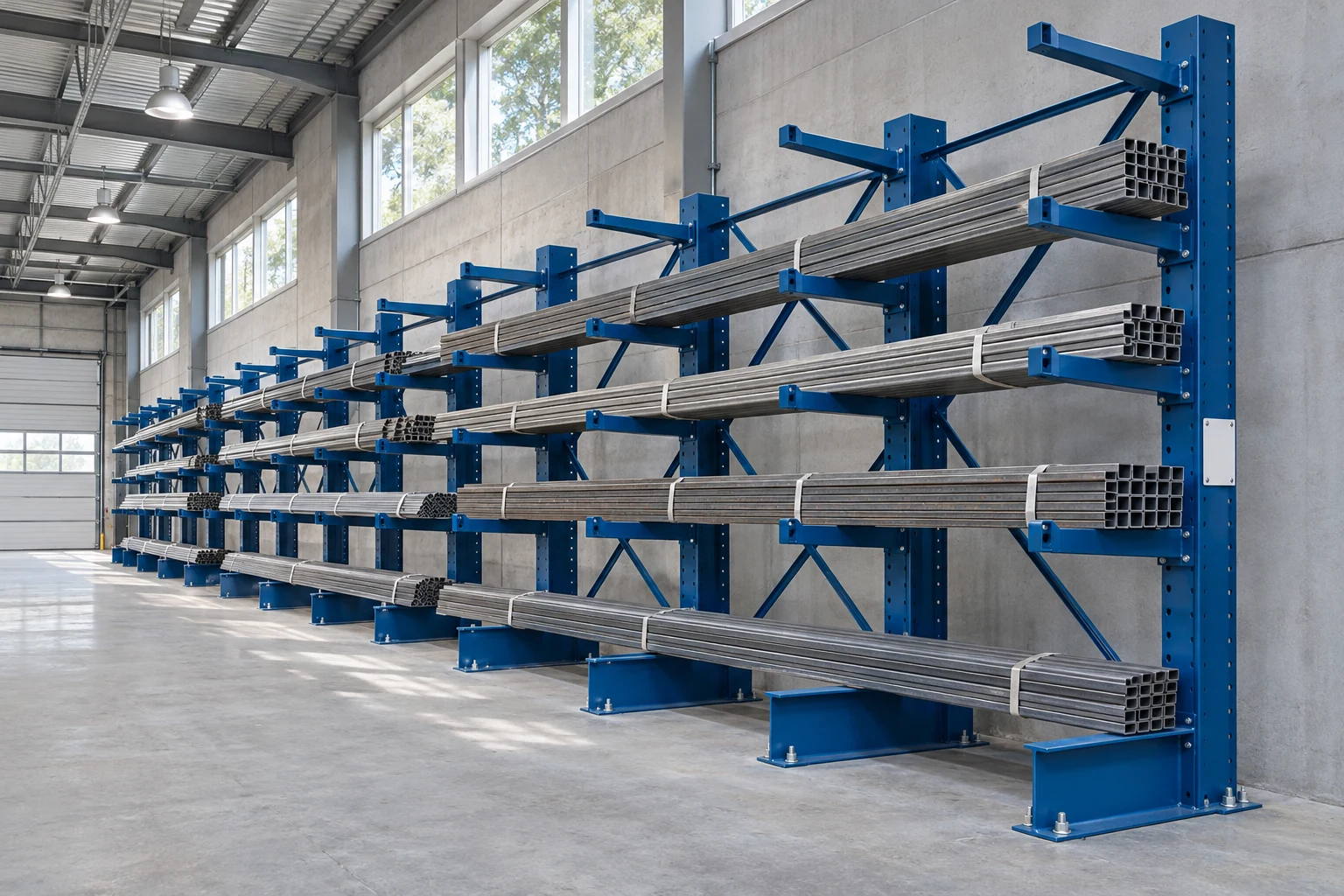
A cantilever rack load notice should communicate approved loading information for the identified installed configuration. It should not be copied from a similar row or assembled from unrelated component ratings. Keep rack identification, approved drawings, load-placement rules and revisions together so operators can connect the information on the notice to the storage positions they use.
Tie the notice to a specific row and configuration
Give each row or reviewed section a stable identifier that matches the facility plan and project records. Record the manufacturer, project or drawing reference, configuration and revision date. The exact format should be agreed with the supplier and the site's responsible personnel, including any applicable requirements.
Two rows can look nearly identical while using different arms, column heights, level arrangements or bracing. A shared color or similar appearance is not enough to justify copying a loading notice. Keep separate records where the approved configurations differ.
Cogan's structural cantilever arms and cantilever rack system information provide component and system context. Obtain the approved loading information for the installed arrangement rather than treating a product table as a complete operating notice.
Separate the information operators need
| Information | Purpose |
|---|---|
| Row or section identifier | Connects the notice to the correct storage location |
| Approved drawing reference | Identifies the reviewed configuration |
| Loading limits supplied for that configuration | Communicates the applicable operating limits |
| Required load arrangement | Explains how the material must bear on the supports |
| Restrictions or special conditions | Identifies uses that are outside the approved arrangement |
| Revision and contact details | Helps staff resolve changes or uncertain information |
Do not collapse every limit into one large number without its meaning and units. An arm rating, a level limit and a column or side limit are not interchangeable descriptions. Ask the supplier how the applicable limits and loading pattern should be communicated for the actual row.
Make the notice readable without creating an obstruction
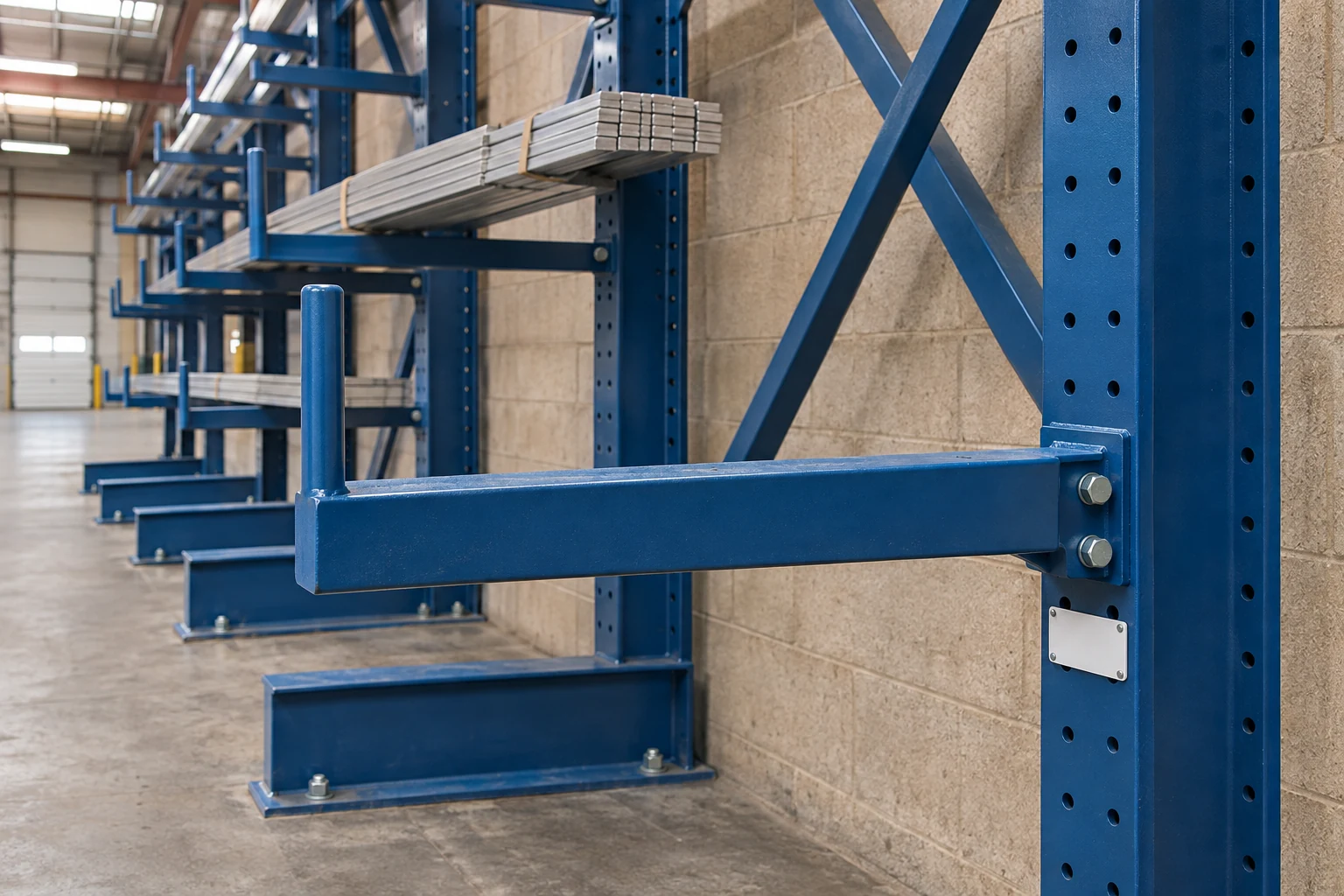
Agree on a visible location where operators can read the information during normal work. Consider approach direction, lighting and whether stored stock will cover it. Keep the notice clear of moving material and avoid mounting methods that alter structural components without approval.
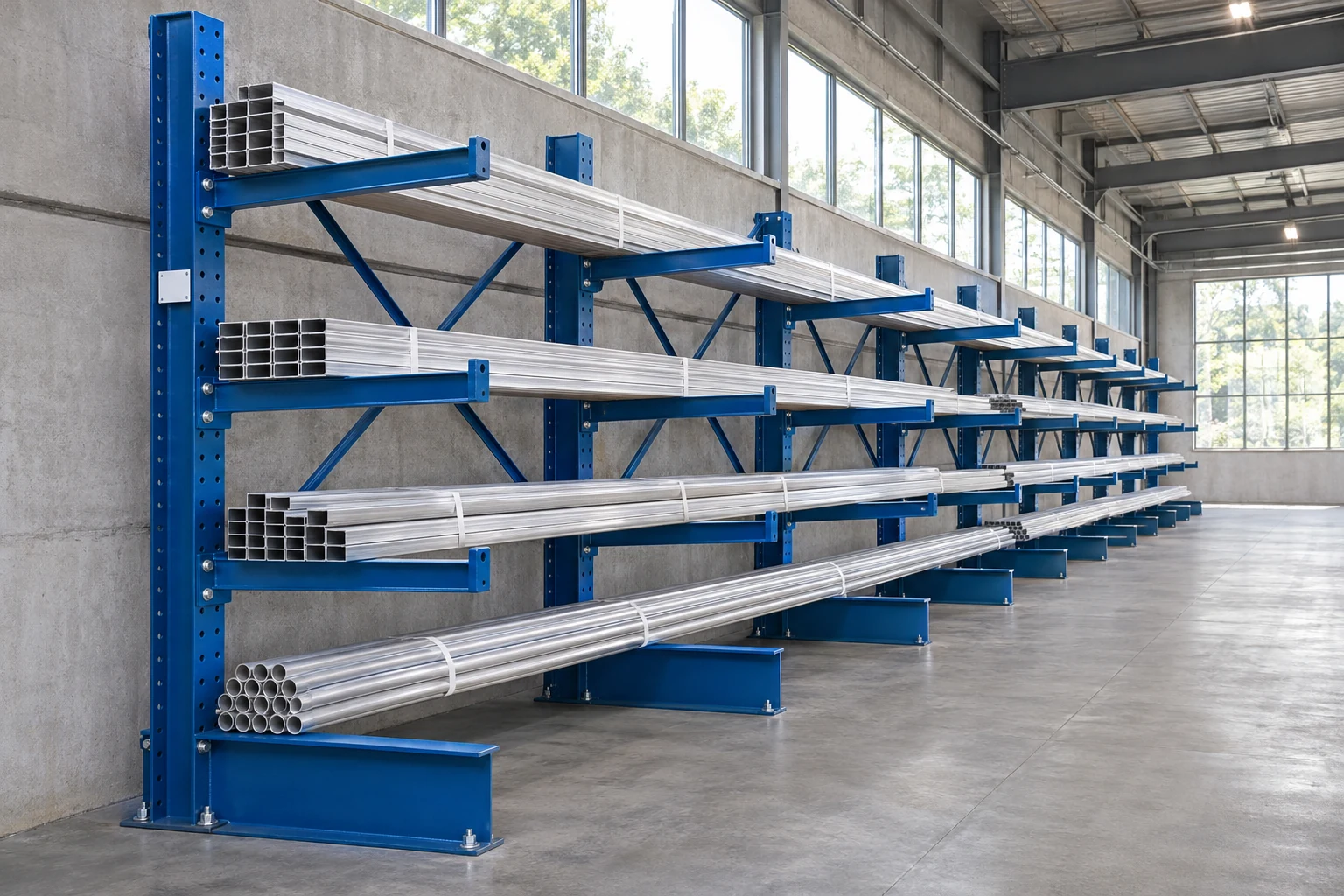
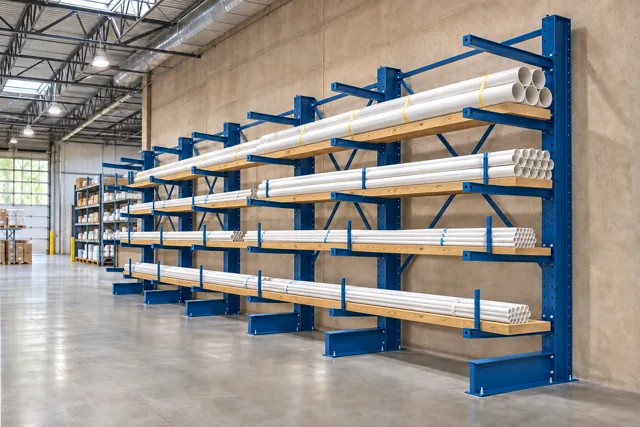
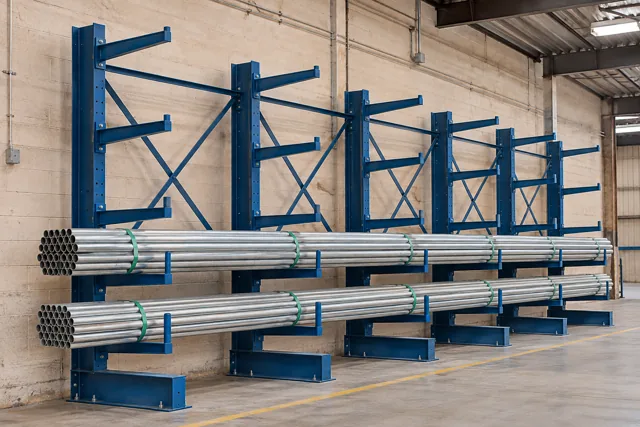
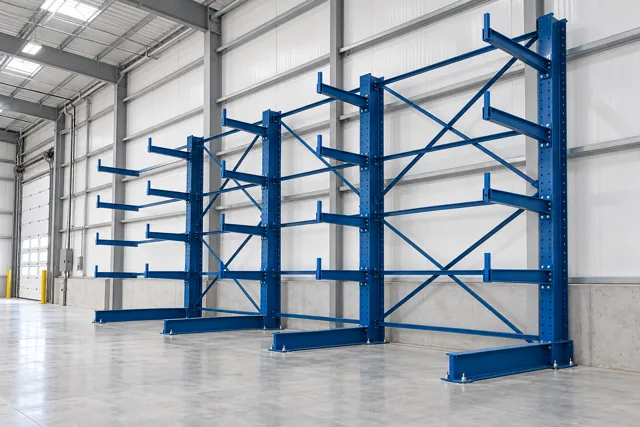
Small component identifiers and the main loading notice can serve different purposes. A tiny plate close to an arm may help identify a part but may not communicate the row's operating limits from the aisle. The photographs here illustrate rack geometry and possible identification locations; they intentionally omit usable rating values.
Treat changes as a document-control event
When an arm level, arm type, brace, support accessory or stored load changes, determine whether the approved configuration and notice need revision before normal use resumes. Preserve the previous record as history while making the current authorized information unambiguous at the rack.
For example, a supervisor may move a level to fit a taller bundle. The old notice can remain perfectly legible while no longer describing the installed arrangement. The problem is not printing quality; it is a mismatch between the physical row and its approved records. Resolve the configuration with the supplier rather than editing the number locally.
An unreadable or missing notice also needs a controlled response. Recover verified records and confirm the row's identity. Do not estimate capacity from a neighboring bay, a photograph or the weight that happened to be stored there previously.
Include notices in the handover package
- Confirm that row IDs match the floor plan and drawings.
- Obtain the approved loading limits, units and load-arrangement information.
- Agree on notice content, location and installation method.
- Demonstrate how operators identify the correct storage positions.
- Assign responsibility for reporting missing notices or proposed changes.
- Keep the current revision with inspection and maintenance records.
For a new or altered row, request a Cogan quote or review with existing drawings and proposed loads. The cantilever-capacity guide explains why the complete configuration matters; this notice process keeps that approved information attached to daily operations.
Frequently asked questions
Can one notice cover several similar-looking cantilever rows?
Only when the approved information actually applies to all identified configurations and the scope is clear. Similar appearance alone is insufficient.
Can staff calculate a row rating by adding arm ratings?
Do not use that shortcut as the loading notice. Obtain the limits and required load arrangement for the approved complete configuration.
What should happen if a loading notice is missing?
Identify the row, recover verified records and follow the facility's controls for uncertain loading information. Do not substitute a guessed value or copy an unrelated notice.
Images are conceptual product visualizations. Final configurations must follow the approved project drawings.
More on Cantilever Racking
PVC Pipe on Cantilever Racks: Plan Support, Bundles and Picking
Match PVC pipe bundles, support spacing and picking practices to approved cantilever rack arrangements and pipe-maker instructions.
Cantilever Rack Accessories: Match Stops and Overlays to the Load
Review cantilever stopper pins, arm stops and shelf overlays as part of the approved rack configuration and handling method.
Cantilever Rack Installation: Prepare the Site and Handover Records
Prepare for cantilever rack installation with delivery checks, access planning, approved documents and a clear handover before loading.
© 2025 Cogan Wire and Metal Products Ltd., all rights reserved.