




Mezzanine Pallet Gates: Plan the Load Envelope and Transfer Sequence
Staging preview.
A mezzanine pallet gate should be selected around the complete load envelope and transfer sequence, not just the nominal pallet width. Confirm the loaded pallet's height, depth and projections, the gate's movement, the forklift approach below and the working route above. The approved arrangement must maintain the intended protected boundary throughout normal loading and unloading.
Start with the largest load that will actually arrive
Measure the goods as handled, including their pallet, wrapping, straps and overhanging packaging. Record the expected weight and whether occasional deliveries differ from the normal stock. A standard pallet size does not establish the space occupied by a tall or uneven load.
Show that envelope on the same plan as the gate, mezzanine columns, adjacent guardrails and upper-level circulation. Include the method used to remove the load once it is on the platform. A pallet may fit within the gate while leaving too little room to withdraw a pallet truck or turn toward the storage position.
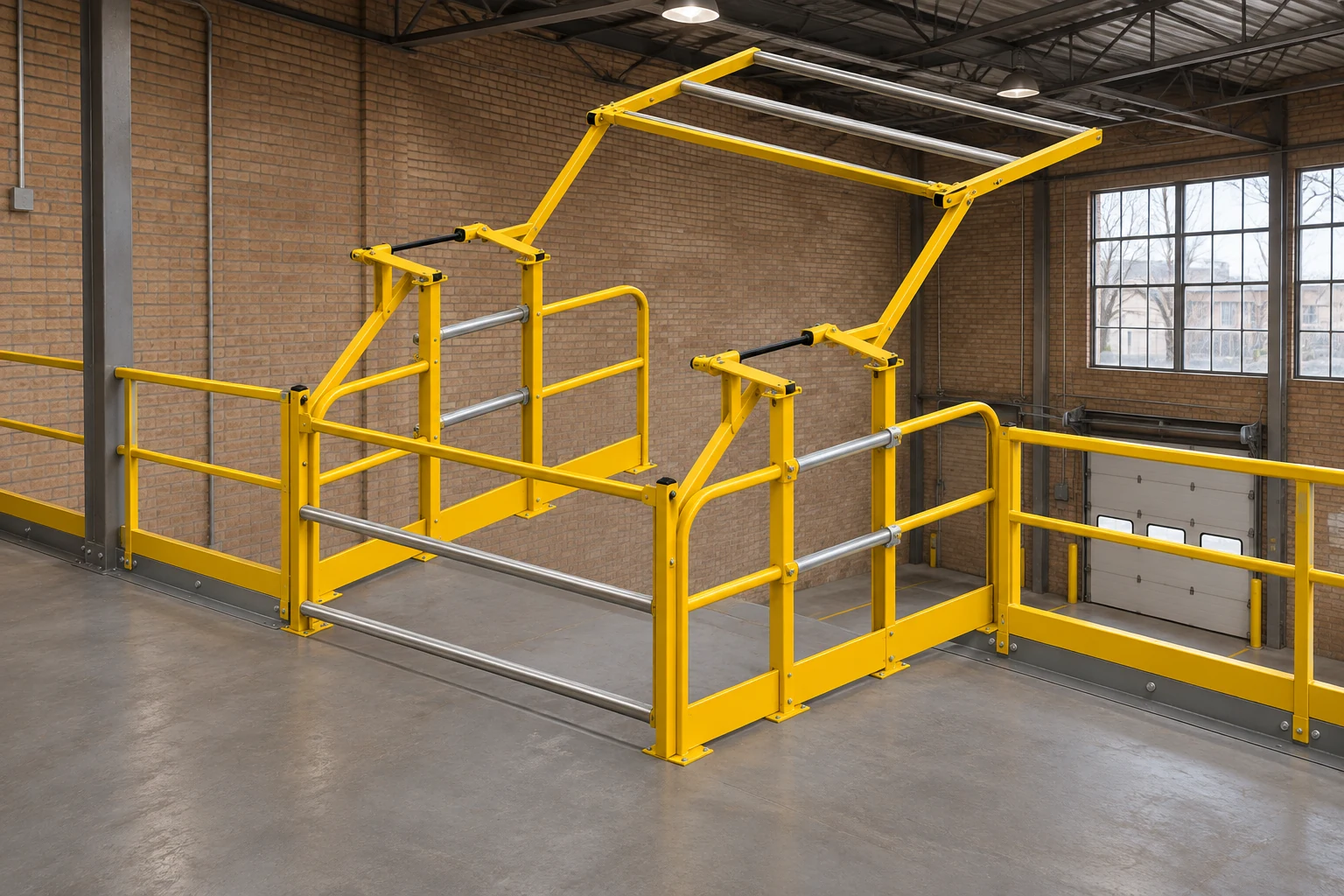
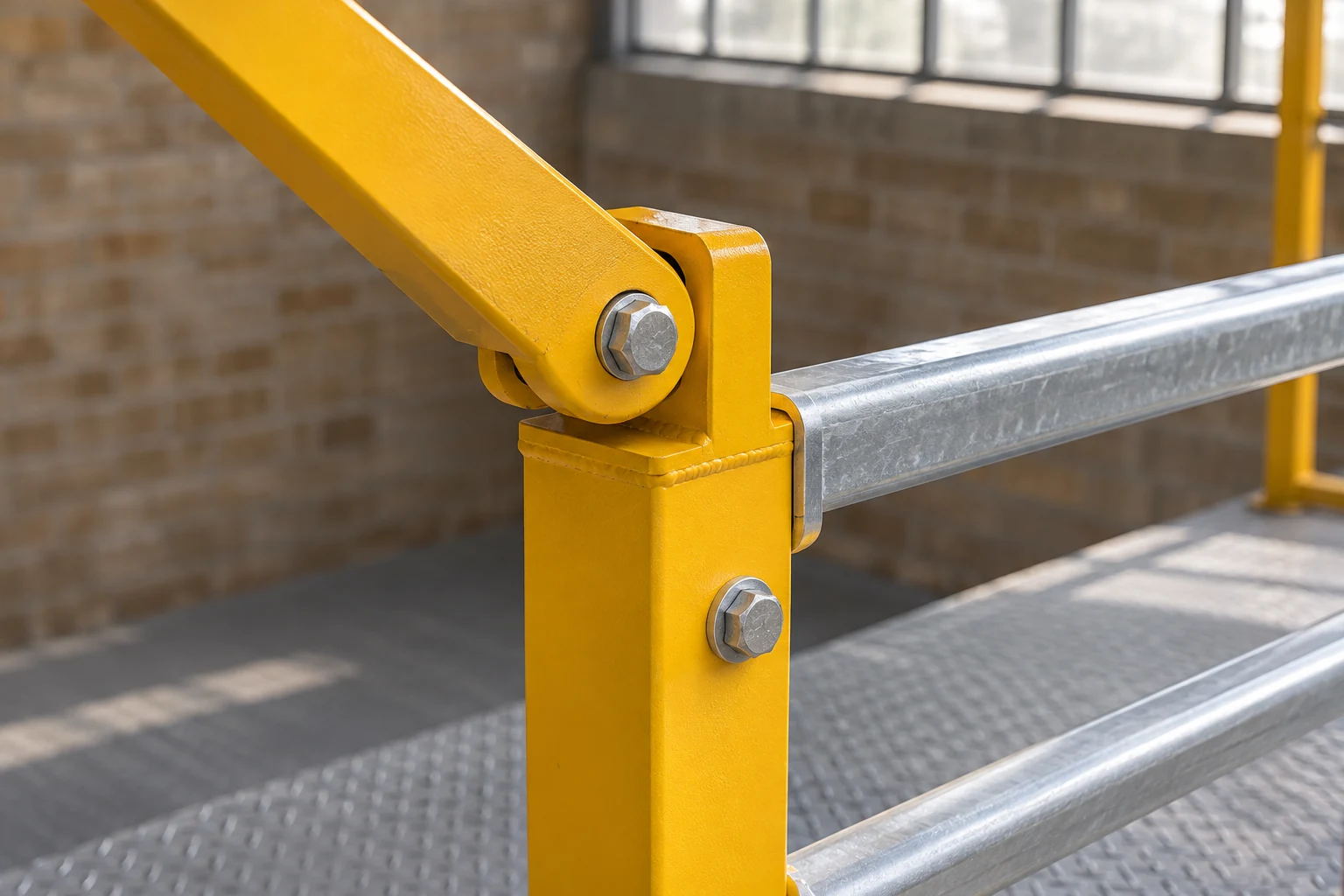
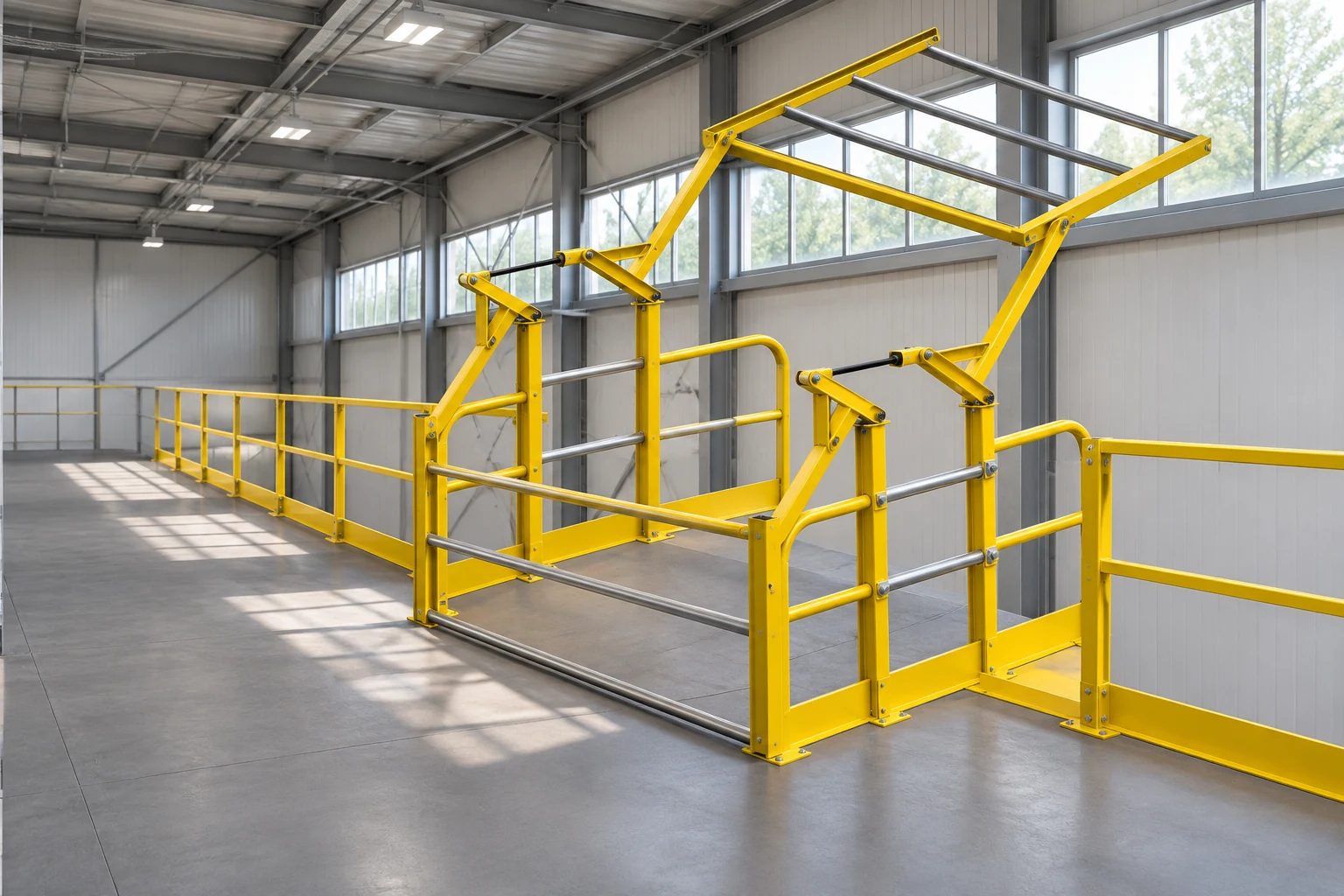
Cogan's safety pivot gate uses linked pivot arms so one side opens while the other closes. Confirm the selected configuration against the current product drawings and installation instructions. The mechanism's movement and the protected loading area need to be considered together; photographs are not clearance drawings.
Review the transfer from both levels
| Part of the operation | Information to confirm |
|---|---|
| Forklift approach | Vehicle, attachments, visibility and loaded approach |
| Load envelope | Maximum width, depth, height and packaging projections |
| Gate travel | Full movement without contact with goods or building services |
| Platform handling | Space to retrieve and move the load after transfer |
| Protected boundary | Gate, side guards and adjacent mezzanine guardrails |
| Structure | Approved platform loads and attachment details |
Keep the upper loading area distinct from an ordinary pedestrian entrance. A gate selected for a ladder opening or a pedestrian route does not automatically serve a pallet transfer. Compare the application within Cogan mezzanine gate options before fixing the opening in the layout.
Describe the sequence before choosing hardware
Write a short operating description showing where the forklift operator, platform worker and load will be at each stage. Have the supplier and facility team review how the specified gate supports that sequence. Avoid a process that depends on a person stepping into an exposed opening, reaching around the barrier or holding a gate outside its intended position.
This planning description is not an operating manual. Training and use must follow the approved installation and manufacturer's instructions. Do not defeat a gate, remove a rail or modify a pivot to accommodate a load that does not fit. Treat a larger load as a design change to review before handling it.
For example, a taller carton may pass through the clear opening but interfere with a moving upper member. That conflict will not appear in a width-only survey. Record the full three-dimensional envelope and check the complete movement rather than testing the limit with an occupied loading area.
Include building services and structural responsibility
Mark nearby lights, sprinklers, ducts, doors and other obstructions. Have the relevant project professionals review the arrangement; an open-looking space is not proof that every required clearance is available. Include the platform's intended loading and attachment details in the structural review.
Cogan's mezzanine engineering information explains the need to coordinate building conditions and project documentation. Assign those responsibilities before ordering so the gate layout is not approved separately from the platform and its use.
Build a quote and handover checklist
- Provide measured plans and the maximum loaded-pallet envelope.
- Identify the transfer and upper-level handling equipment.
- Show gate travel, protected boundaries and adjacent services.
- Confirm the approved attachment and platform-loading information.
- Include installation, demonstration, training information and maintenance documentation.
- Record how future changes to goods or handling equipment will be reviewed.
Request a project quote with that package. Keep the approved gate and mezzanine drawings together, and compare the completed installation with them before putting the loading bay into normal use.
Frequently asked questions
Is pallet width enough to size a mezzanine gate?
No. Include the loaded pallet's depth, height and projections, the gate's movement and the space required to place and retrieve the load.
Can a pedestrian gate replace a pallet safety gate?
Do not assume so. Pedestrian entry and pallet transfer are different applications. Select the system for the actual opening, operating sequence and approved protective arrangement.
What should happen when a new load does not fit?
Stop using that loading arrangement for the new load and obtain a review. Do not alter the gate or defeat its intended operation to make the transfer possible.
Images are conceptual product visualizations. Final configurations must follow the approved project drawings.
More on Mezzanines
Moving a Modular Mezzanine: What Must Be Rechecked at the New Site
Review existing drawings, component condition, new-site loads and installation scope before relocating a modular mezzanine.
Freestanding vs Rack-Supported Mezzanines: Compare Supports and Layout
Compare freestanding and rack-supported mezzanine proposals by their load paths, storage layout, access and future changes.

Warehouse Mezzanine Cost: Compare Complete Project Quotes
Compare mezzanine quotations using the same loads, flooring, access, installation and building-work scope instead of a square-foot price alone.
© 2025 Cogan Wire and Metal Products Ltd., all rights reserved.