




Changing Forklifts? Recheck Rack Protection and Operating Clearances
Staging preview.
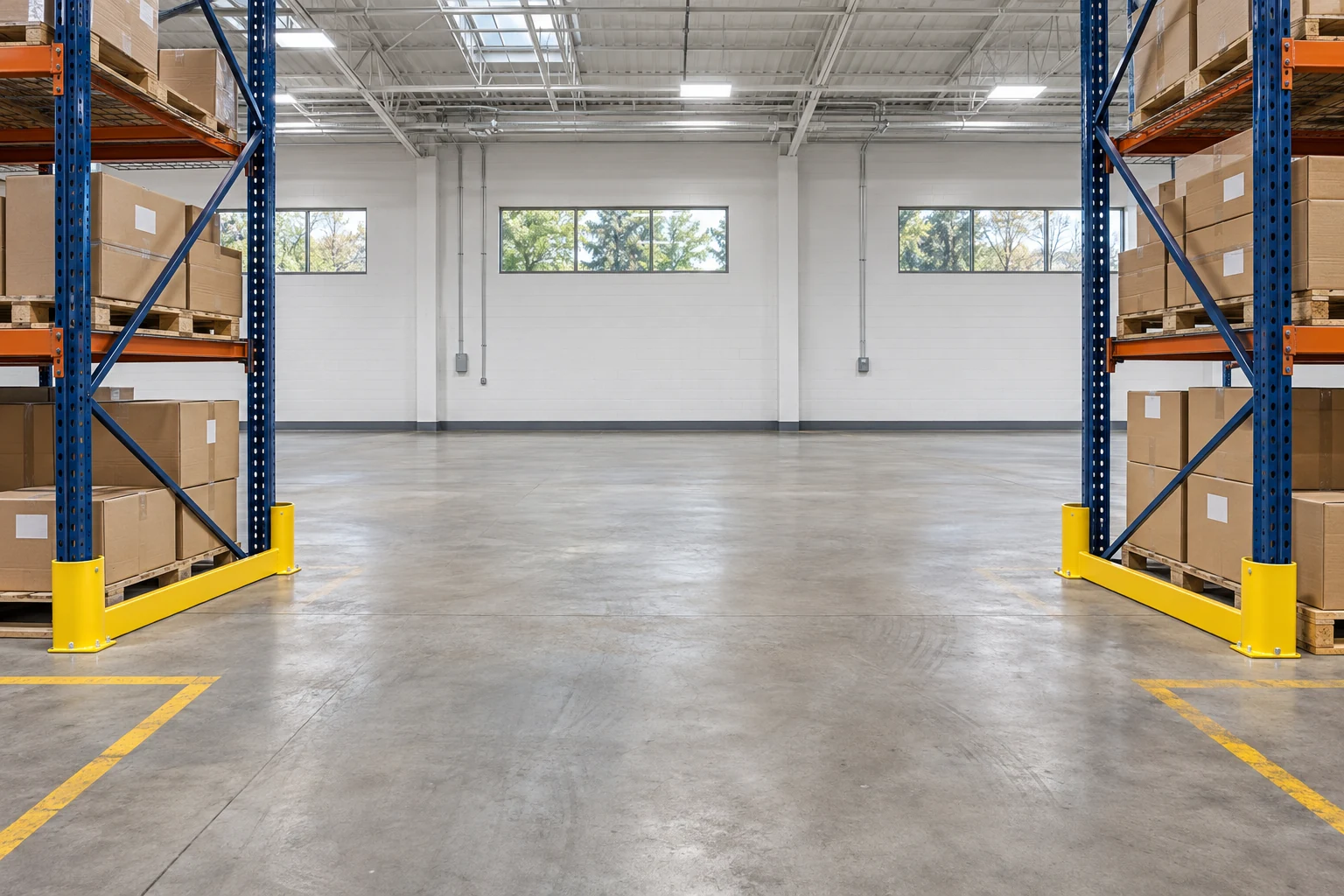
Recheck rack protection whenever a forklift, attachment, load envelope or operating pattern changes. The replacement truck may turn differently, approach a rack at a different height or carry wider goods even if its advertised lifting capacity is similar. Review the vehicle, installed guards and operating clearances together before the new arrangement becomes routine.
Describe the change in operational terms
Collect the relevant truck and attachment information from the equipment supplier. Compare overall dimensions, turning behavior, low-level projections, visibility and the actual loads to be handled. Do not use the truck's lifting-capacity label as a substitute for its geometry or operating instructions.
Include whether the change introduces new picking methods, traffic directions or storage positions. A different attachment may affect clearance while the truck body stays the same. A wider load can create an exposure that was absent when the guard layout was originally approved.
In the United States, OSHA's powered-industrial-truck training guidance includes different truck types and changed workplace conditions among the triggers for relevant refresher training. Coordinate the physical layout review with the employer's training and authorization process. Canadian operations should apply their own applicable requirements and equipment instructions.
Compare the old and proposed arrangement
| Review item | What to compare |
|---|---|
| Vehicle and attachment | Dimensions, projections, turning and operating limits |
| Actual load | Pallet and goods envelope, overhang and handling method |
| Cross-aisles | Loaded turns, reversing and adjacent pedestrian movement |
| Rack-end guards | Coverage, installed footprint and possible contact directions |
| Upright protection | Clearance around forks, outriggers and rack members |
| Operating procedure | Routes, staging positions, supervision and training |
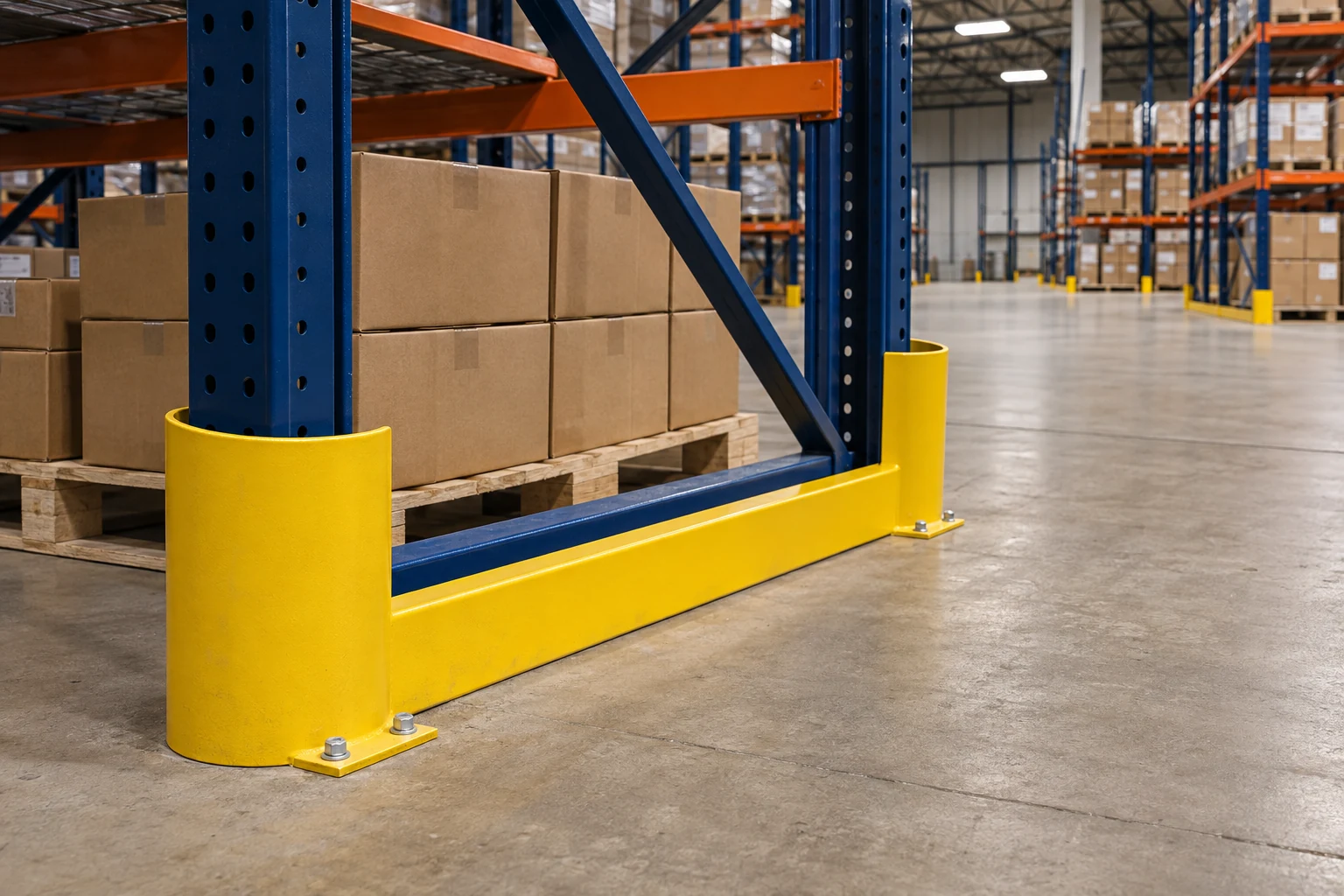
Cogan's rack protection range includes systems for different exposures. Wrap-around rack aisle protectors address vulnerable row ends, while other components serve different locations. Do not assume one existing guard protects against every part of a different vehicle or load.
Review the installed footprint, including the anchors
Measure the actual guard, not only the rack face shown on an old layout. Include baseplates, anchor positions, curved ends and any other projections that reduce usable clearance. Record damaged or displaced components separately; a fit check should not be interpreted as a condition assessment.
Show the truck supplier and protection supplier the same measured plan. Confirm where the loaded vehicle needs to move and how the proposed protection addresses the exposure. Do not reduce a guard's footprint by moving anchors, cutting parts or omitting a component without approval.
For example, a replacement truck's low outriggers might need space beside a rack upright that the previous truck never used. Removing the post protector may create clearance while removing the intended protection. Resolve that tradeoff through a reviewed arrangement rather than an improvised installation change.
Keep impact claims tied to their tested conditions
A truck's maximum lifting capacity is not a barrier impact rating. Ask how the actual vehicle, load, speed, direction and likely contact height relate to the selected guard's documented performance. Include supporting concrete and anchoring in that review.
Do not conduct an informal collision test or use an occupied aisle to discover the turning limit. Any commissioning or maneuvering assessment should follow the facility's approved controls and the equipment supplier's instructions. Where questions remain unresolved, keep the new operation out of normal service until the responsible parties have addressed them.
Close the change with clear records
- Identify the previous and replacement truck, attachments and intended loads.
- Record the reviewed routes, storage positions and measured clearances.
- Confirm guard selection, condition and approved installation details.
- Complete required training, evaluation and operating-procedure updates.
- Assign responsibility for observing early operation and reporting conflicts.
- Keep the revised plan with rack and protection inspection records.
The review should also cover rental equipment and temporary substitutions. A short operating period does not make a different vehicle's geometry irrelevant. Give supervisors a clear process for checking substitutions before they enter the affected aisles.
Request a Cogan protection review or quote with the proposed equipment information and site plan. The rack-column clearance guide provides further detail on fitting protection around vulnerable uprights.
Frequently asked questions
Does the same lifting capacity mean the same rack clearance?
No. Two trucks with similar advertised lifting capacity can differ in dimensions, attachments, turning behavior and operating requirements. Review the actual equipment and load envelope.
Can a protector be removed if it interferes with a new truck?
Do not treat removal as an automatic solution. It changes the protected arrangement. Have the affected clearance and protection requirements reviewed together.
Should temporary rental forklifts be included in the review?
Yes. A temporary substitution can introduce different geometry or operating conditions. Apply the facility's change-review and authorization process before normal use.
Images are conceptual product visualizations. Final configurations must follow the approved project drawings.
More on Rack Protection
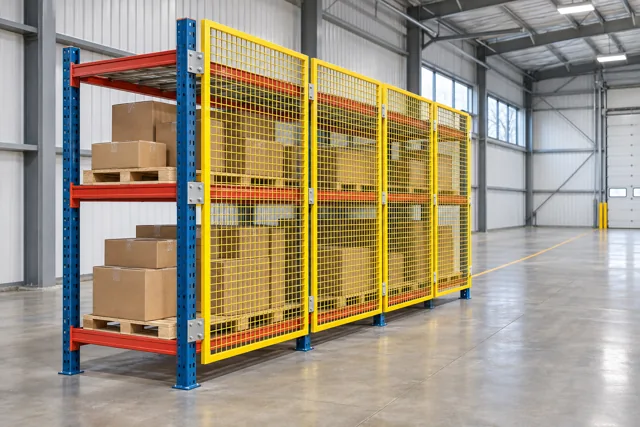
Rack Guards and Flue Spaces: Coordinate Containment with Fire Protection
Review rack guards, load placement, flue spaces and sprinkler access together before approving changes to rack protection.
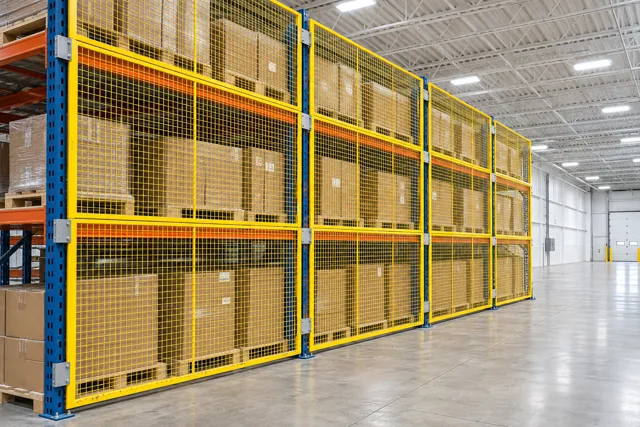
Pallet Rack Safety Netting vs Wire Mesh: Compare Coverage and Attachments
Compare rack netting and wire-mesh guards using stored items, containment requirements, clearances, access and rack interfaces.
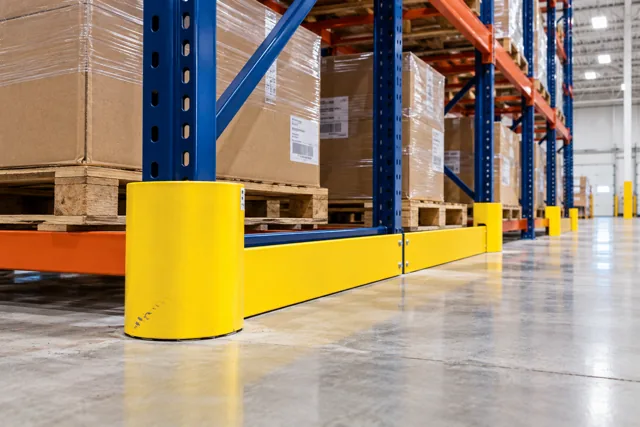
Rack Protection Checks: Record Guard Damage Separately from Rack Damage
Add rack protection observations to site inspections while keeping protector condition, rack condition and approved repair decisions separate.
© 2025 Cogan Wire and Metal Products Ltd., all rights reserved.