




Rack Protection Checks: Record Guard Damage Separately from Rack Damage
Staging preview.
Record rack-protection condition separately from the condition of the rack it protects. An intact guard does not prove that an upright is undamaged, and a damaged guard does not establish the extent of any rack damage. Link the two observations by location, then use the site's process to obtain the appropriate assessment and response.
Give each observation a precise location
Use the site's rack-row and bay identifiers, with an additional reference for the affected upright or protector. Take an overview photograph that shows the location and a detail photograph of the concern where it is safe to do so. A close-up of yellow steel without location context is difficult to use later.
Record the date, observer and what was actually seen. Distinguish a paint mark from visible distortion, movement or missing hardware. If an impact was reported, keep the available event information with the observation and mark unknown details as unknown.
Separate the protector, rack and floor findings
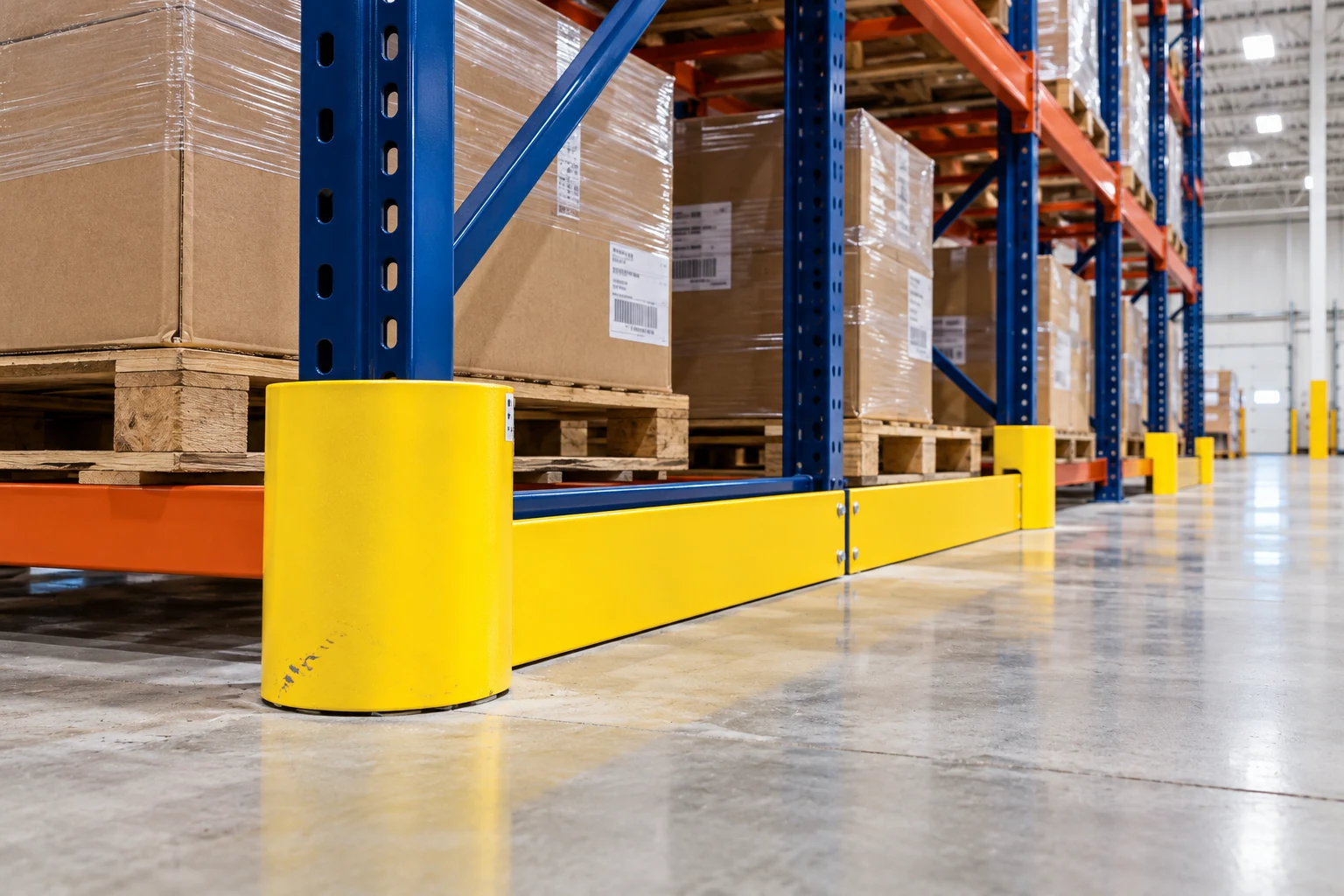
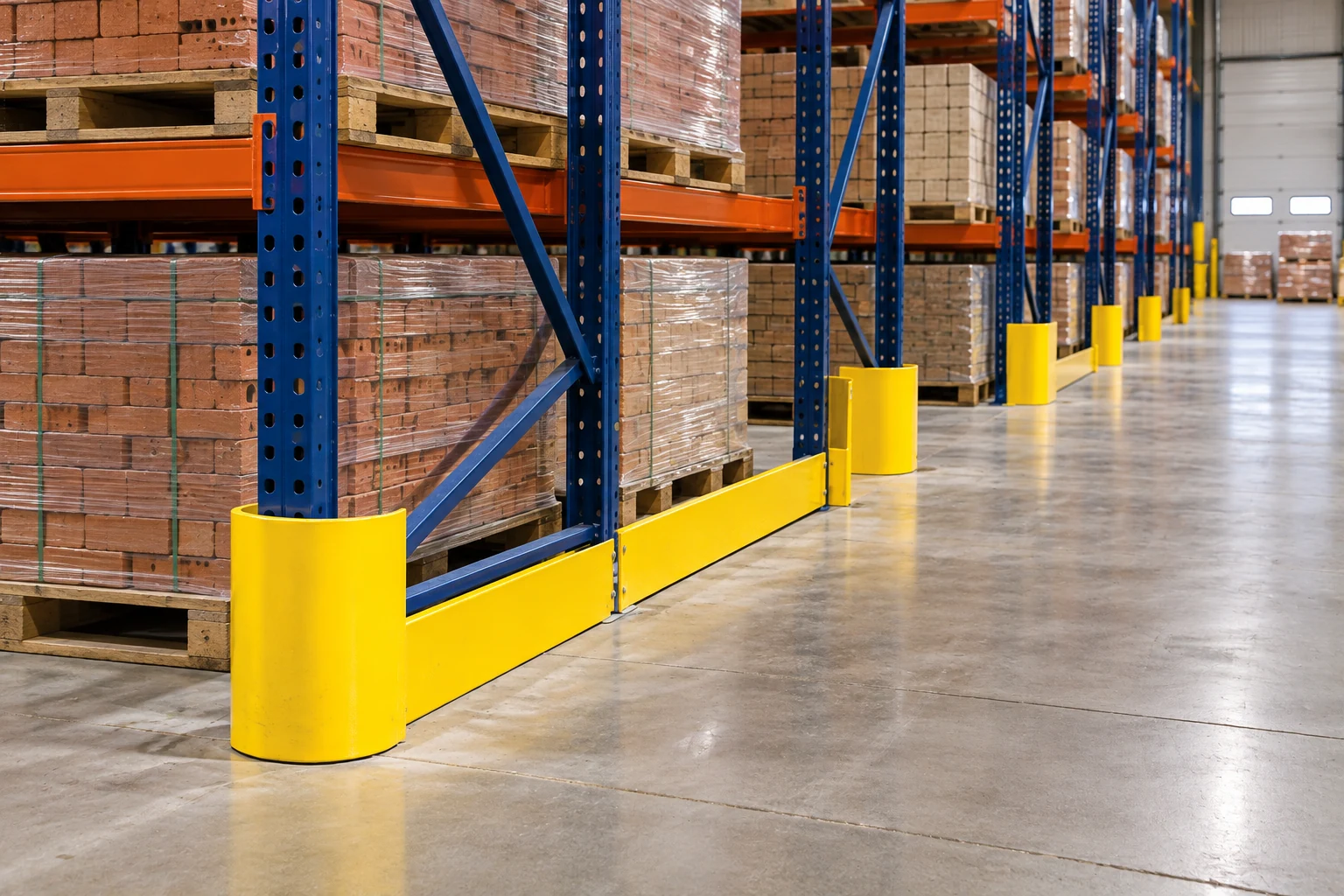
Cogan's rack post protectors are selected around the upright and mounting conditions. Their location close to the rack makes it useful to record neighboring components as separate items rather than describing everything as “rack damage.”
| Record area | Examples of observations to document |
|---|---|
| Protector | Contact marks, deformation, changed position or missing parts |
| Rack | Visible upright, brace or connection concerns requiring assessment |
| Floor and mounting | Concrete damage, movement or an apparent anchor issue |
| Operating space | Obstructed aisle, changed pallet position or reduced clearance |
| Follow-up | Responsible person, assessment status and approved action |
Do not use this checklist as a pass/fail engineering test. It helps collect information for the responsible team. Avoid testing the protection by striking it, moving loaded components or attempting field repairs during an observation round.
Keep unresolved items visible
Assign an owner and status to each concern. Useful statuses include awaiting assessment, approved work pending and closed with evidence. The record should identify any restrictions or temporary arrangements established under the site's procedure and who is responsible for maintaining them.
A replacement purchase order is not the same as a closed finding. The affected rack or slab may need separate assessment, and the installation may not yet be complete. Keep the original observation linked to the work record until the defined closeout requirements are met.
Review changes in the operating layout
Look for conditions that have changed since the protection was selected. Different pallets, truck attachments, turning routes or staging positions can alter the contact exposure and available clearance. Record these changes even when there is no obvious damage.
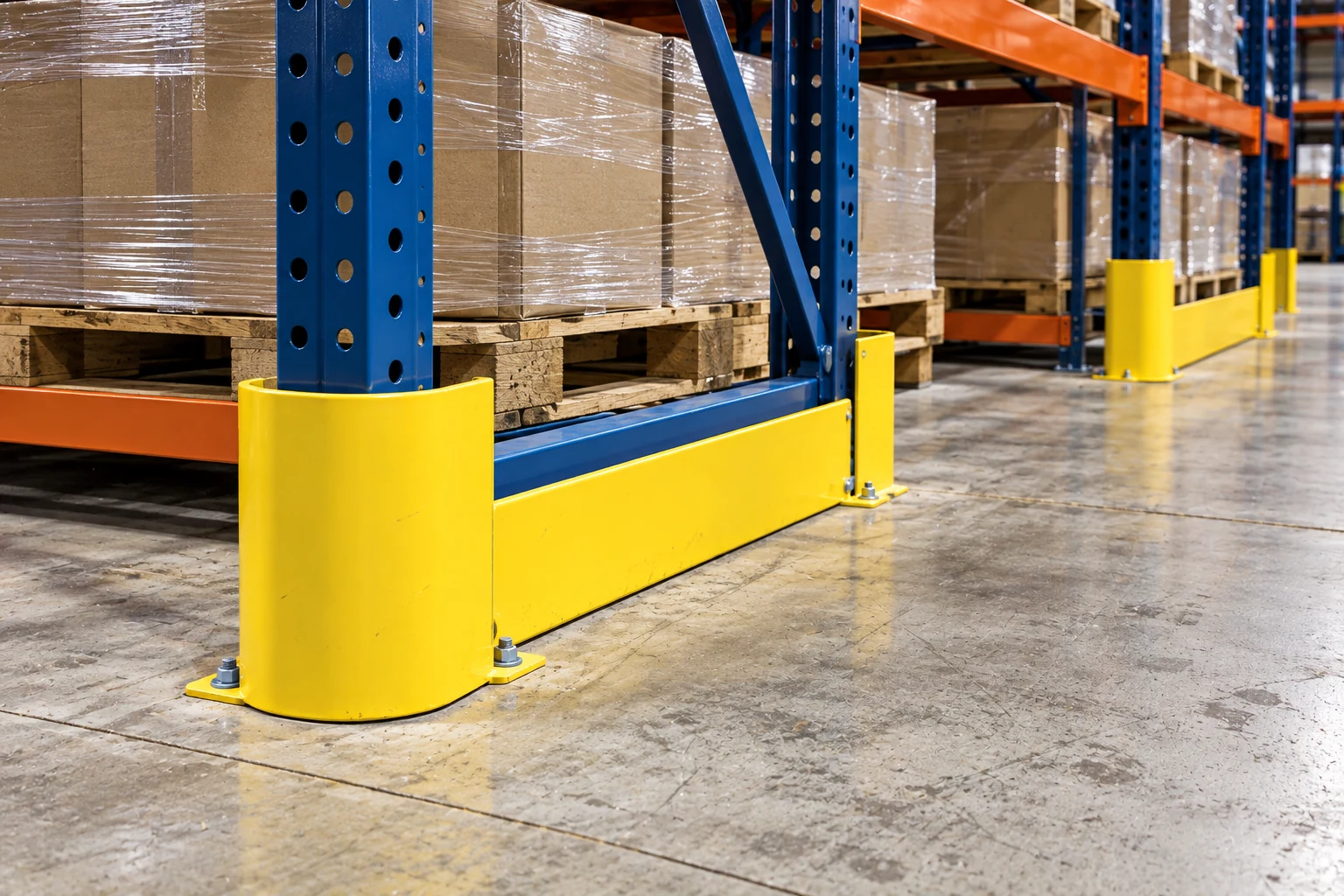
The column-protector clearance guide explains the fit and footprint information to collect. The end-protection guide addresses cross-aisle exposure, while the floor-angle guide covers low continuous protection. Use the relevant product information rather than assuming every yellow component performs the same function.
Close the finding with a documented outcome
Record the assessment outcome, approved work and completion evidence under the site's process. Include replacement part identification and any revised layout or installation requirements. If a finding remains open, retain its status instead of removing it from the list because the visible mark has been painted over.
Choose observation frequency through the facility's risk assessment, operating conditions and applicable instructions. This guide does not prescribe a universal interval or substitute for a qualified pallet-rack inspection. Its purpose is to make protection-related observations traceable and useful.
For replacement or revised protection, request a Cogan quote with the location plan, component details, photographs and relevant assessment findings. Keeping the protector and rack records separate helps the supplier understand the requested scope without implying that a new guard repairs an existing rack defect.
Frequently asked questions
Does an undamaged guard prove the rack is undamaged?
No. Record and assess the rack condition separately. The appearance of one component does not establish the condition of the complete installation.
Is ordering a replacement protector enough to close an incident record?
No. Closeout should follow the site's defined assessment and work-completion process, including any separate rack, floor or mounting findings.
How often should rack protection be checked?
Set the observation process through the facility's risk assessment, operating conditions and applicable instructions. This guide does not provide a universal inspection interval.
Images are conceptual product visualizations. Final configurations must follow the approved project drawings.
More on Rack Protection
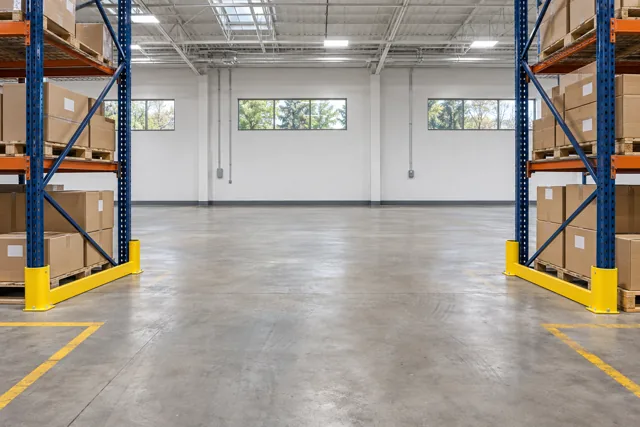
Changing Forklifts? Recheck Rack Protection and Operating Clearances
Review rack guards, aisle-end protection and clearances when forklift dimensions, attachments, loads or operating patterns change.
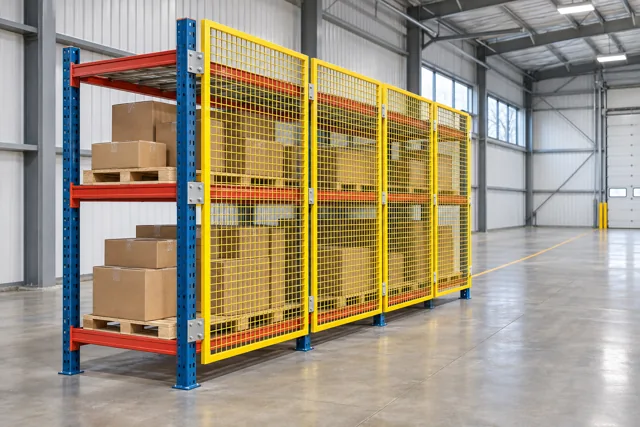
Rack Guards and Flue Spaces: Coordinate Containment with Fire Protection
Review rack guards, load placement, flue spaces and sprinkler access together before approving changes to rack protection.
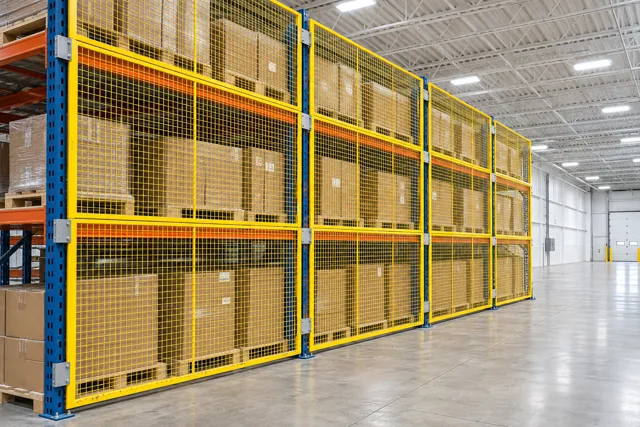
Pallet Rack Safety Netting vs Wire Mesh: Compare Coverage and Attachments
Compare rack netting and wire-mesh guards using stored items, containment requirements, clearances, access and rack interfaces.
© 2025 Cogan Wire and Metal Products Ltd., all rights reserved.