




Steel vs Polymer Warehouse Barriers: Compare Tested Systems
Staging preview.
Compare steel and polymer warehouse barriers as specified, tested systems rather than ranking the materials in isolation. Establish the contact exposure, required coverage, available clearance, anchoring conditions and restoration expectations. A material name or a headline impact number cannot establish whether a proposed barrier fits the warehouse.
Define the same protection task for both proposals
Mark vehicle routes, load overhang, approach directions and the assets or areas being protected. Identify required pedestrian crossings and maintenance access. Give each supplier the same operating information, including what is known and what remains uncertain about the contact exposure.
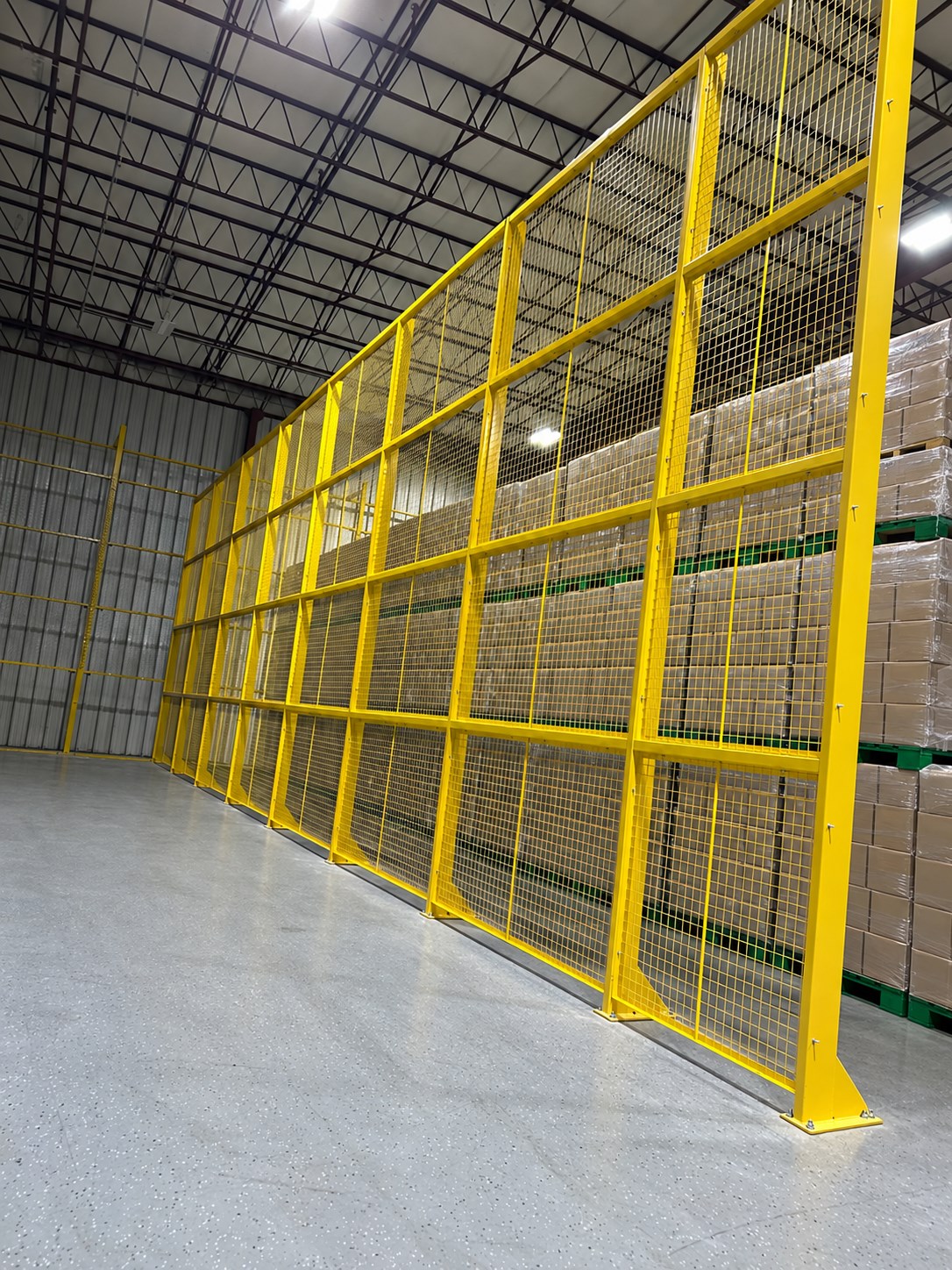
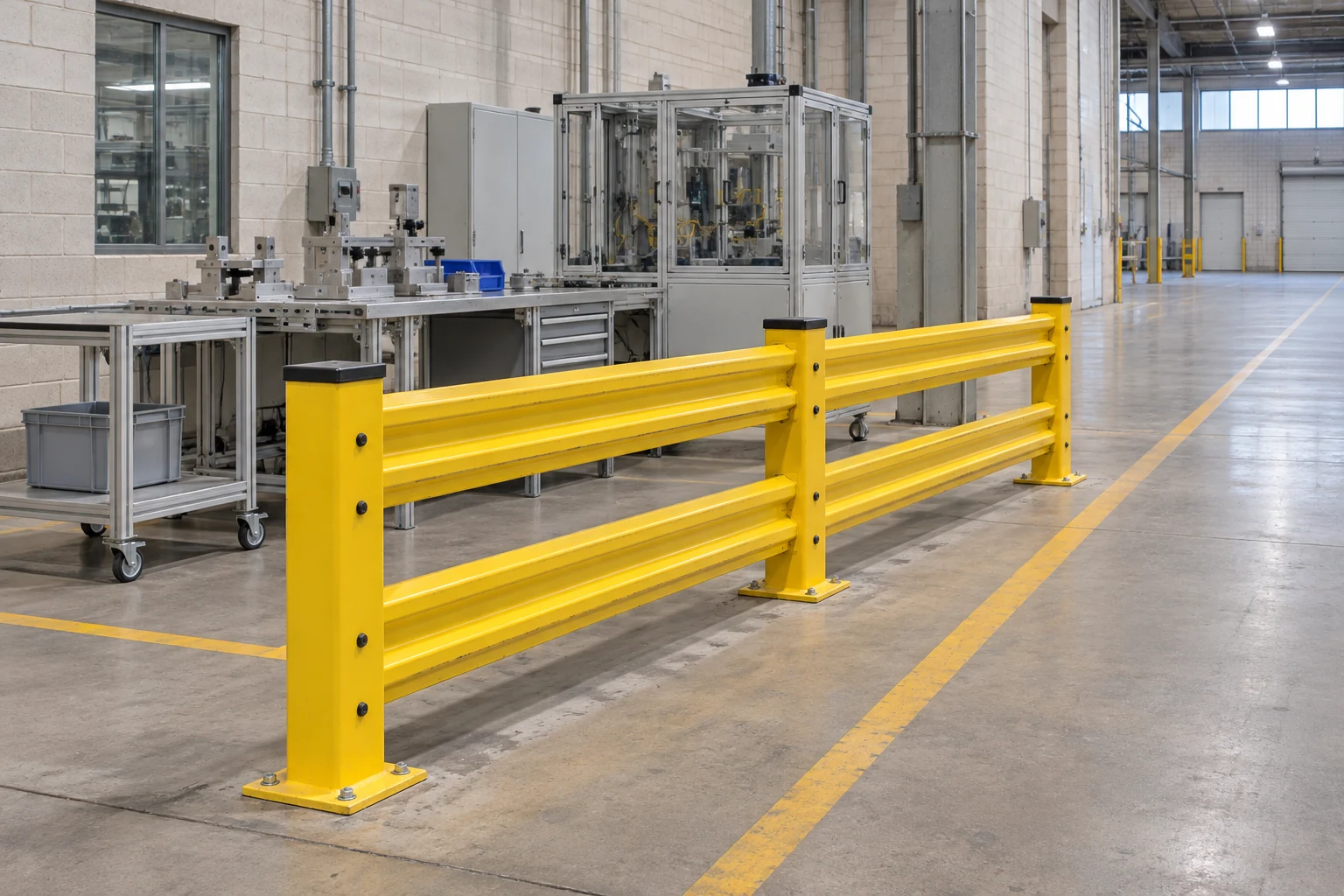
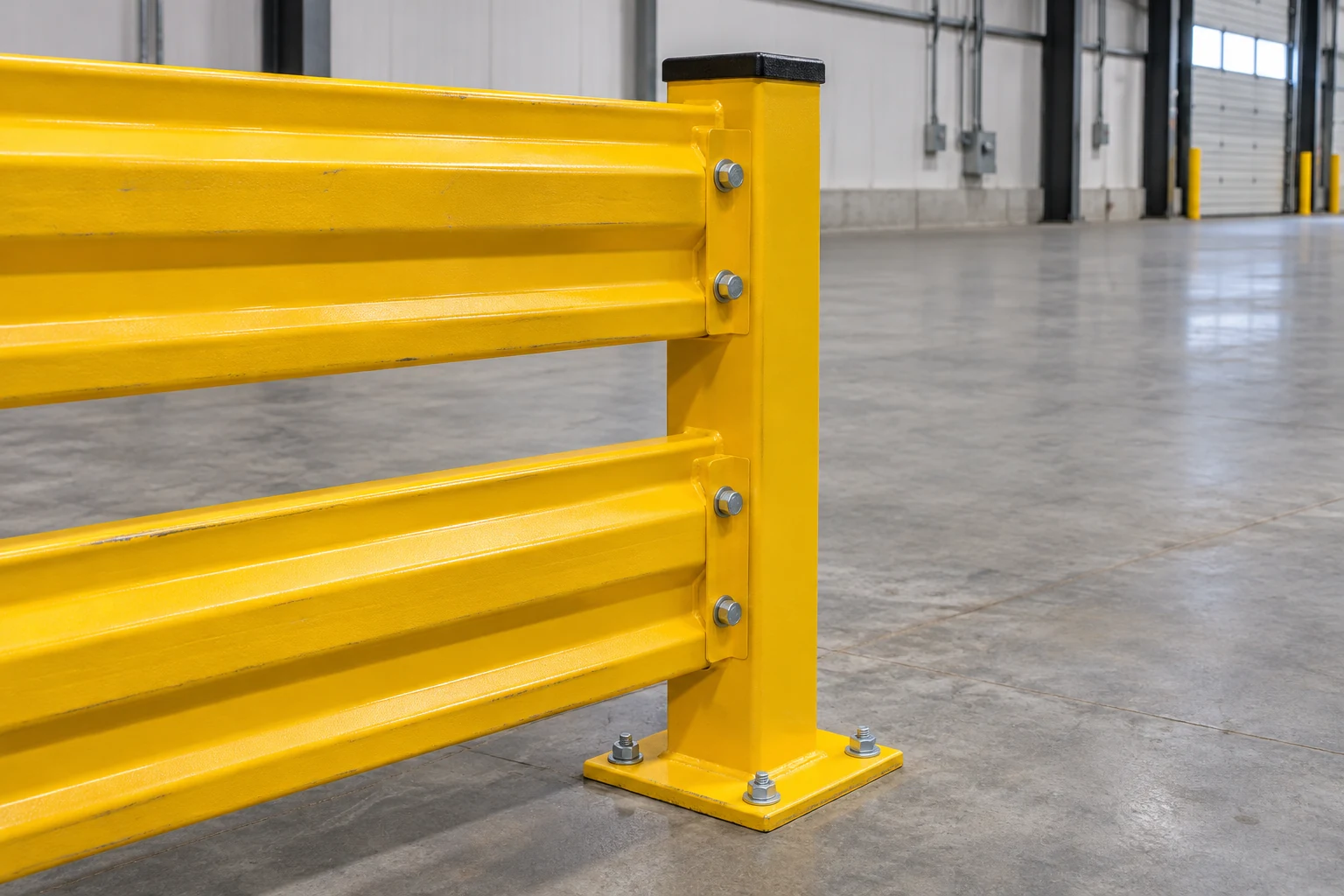
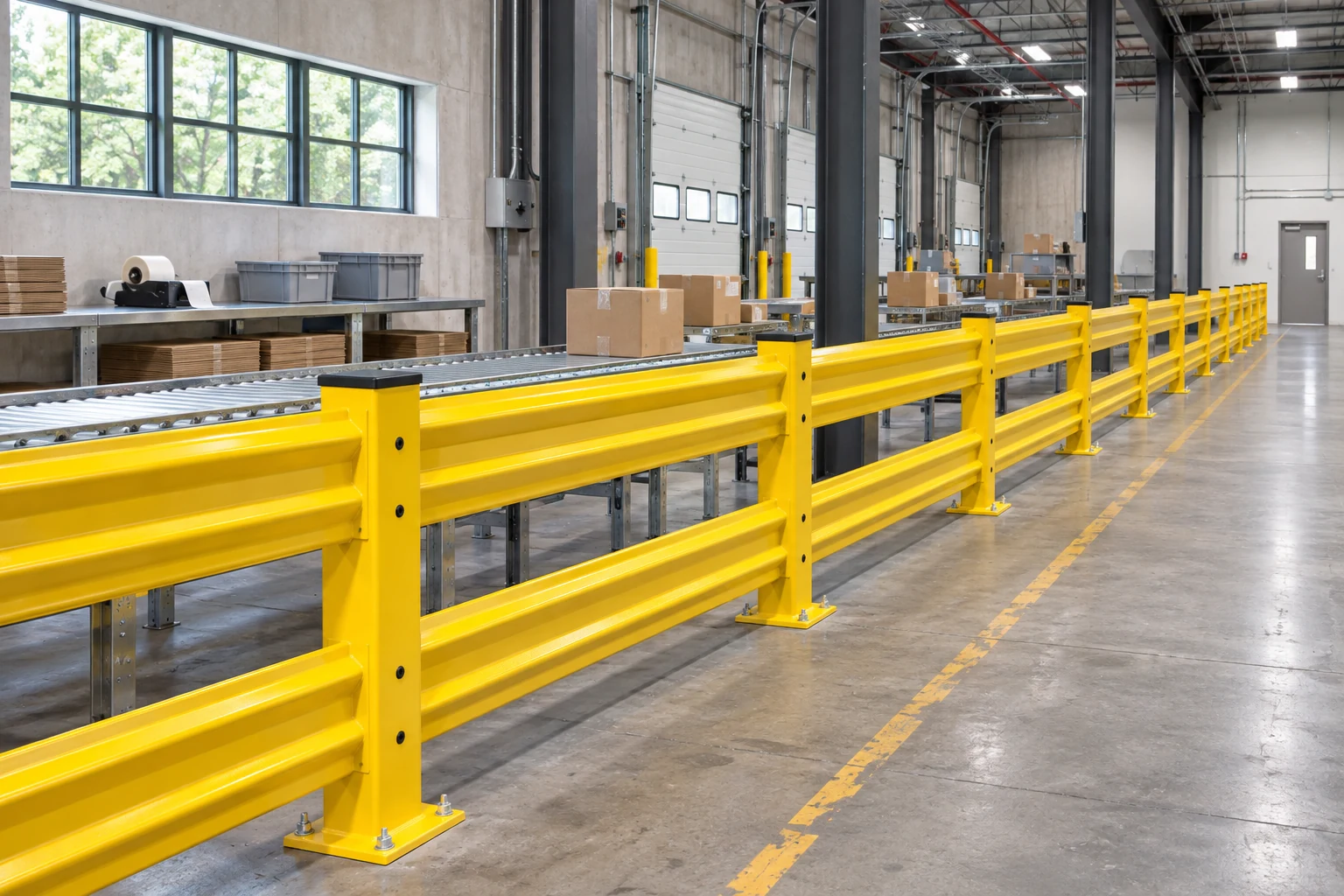
Cogan's heavy-duty steel guardrails use rails and posts in a configured system. Polymer manufacturers also offer different systems for different applications. The illustrations here show the Cogan steel option; they do not represent a polymer product or a comparative impact test.
Read performance information with its conditions
Ask for the tested configuration and the conditions behind a performance claim. Relevant details include vehicle or test mass, speed, direction, contact height and what performance was measured. Check whether the proposed installation matches the tested arrangement and what limitations apply.
The impact-rating guide explains why a headline number is incomplete. As a separate manufacturer's example, A-SAFE's impact-rating explanation discusses the inputs used to describe an impact. Its product claims should not be transferred to another manufacturer's system or treated as a universal property of polymer.
| Comparison item | Ask each supplier to identify |
|---|---|
| Intended function | Vehicle protection, pedestrian separation or another specified task |
| Test basis | Configuration, impact conditions and measured performance |
| Clearance | Required space around the barrier for the specified application |
| Mounting | Posts, baseplates, anchors and floor assumptions |
| Environment | Suitability for the actual temperature, exposure and cleaning conditions |
| Restoration | Assessment, parts and approved response after contact |
Compare the full installed footprint
Include the posts and mounting footprint as well as the rail line. Ask how the system's required clearance affects nearby equipment, people and stored goods. Do not assume a particular clearance solely because a product is described as flexible or rigid.
Show doors, service panels and the space used during maintenance. The removable-guardrail planning guide addresses access arrangements for compatible systems. A removable section should have a defined operating process; it is not an invitation to leave the protective boundary incomplete.
Make environmental and maintenance requirements explicit
Describe the actual location and operating conditions rather than choosing a material from a generic indoor/outdoor label. Include expected cleaning methods and any unusual exposure. Request the applicable product information instead of assuming every steel coating or polymer formulation behaves the same way.
Discuss how the site will identify and report damage, maintain the components and obtain replacements. The post-impact response guide explains how to document an incident without treating an observation as an engineering approval to continue use.
Compare complete scope and responsibilities
Use a common plan when comparing quotations. Include rails, posts, corners, gates, anchoring, installation, delivery and any floor work identified during review. Separate the purchase price from assumptions about future repair or replacement; do not invent a service life or savings percentage.
Record the selected system and its approved layout with the facility documents. If the vehicle routes or equipment change, review the original protection assumptions. Request a Cogan quote with the same exposure and access brief used for the comparison so the steel proposal can be assessed on a clear basis.
Frequently asked questions
Is steel or polymer always the better warehouse barrier material?
No universal answer applies. Compare the specified systems against the same exposure, tested performance, clearance, installation and operating requirements.
Can impact ratings be compared as single numbers?
Not reliably without the conditions and configuration behind them. Request the test basis, measured performance and limitations for each proposed system.
Does a flexible barrier need no clearance behind it?
Do not assume that. Obtain the required clearance for the actual system and application, then show it on the operating layout.
Images are conceptual product visualizations. Final configurations must follow the approved project drawings.
More on Guardrails
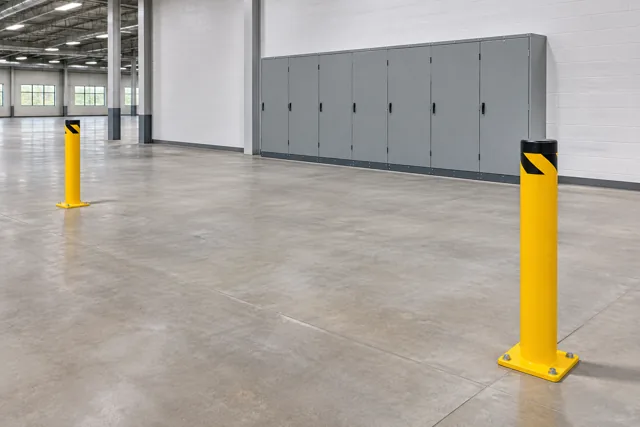
Electrical Panel Impact Protection: Preserve Working Space and Access
Coordinate warehouse bollards and guardrails with electrical equipment working space, door movement, access and vehicle exposure.
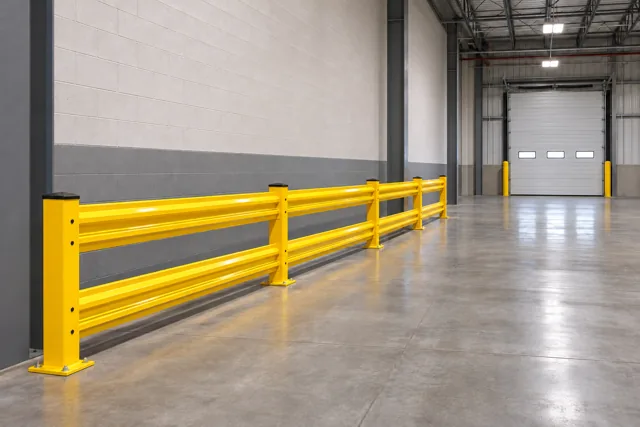
Forklift Guardrails Near Loading Docks: Plan the Approach and Door Access
Plan interior loading-dock approach guardrails around vehicle turning, pedestrian routes, door hardware and maintenance access.
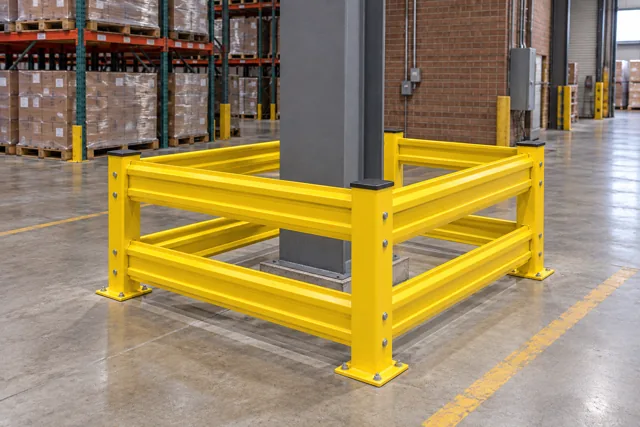
Warehouse Column Protection: Plan Around the Building Support
Plan protection for warehouse building columns using approach directions, base geometry, vehicle loads and service access, distinct from rack-post protection.
© 2025 Cogan Wire and Metal Products Ltd., all rights reserved.