




Cogan Blog
Insights, guides, and industry trends on mezzanines, industrial storage, and warehouse optimization.
Articles are compiled from publicly available industry sources for informational purposes only. Images are illustrative and actual products may vary.
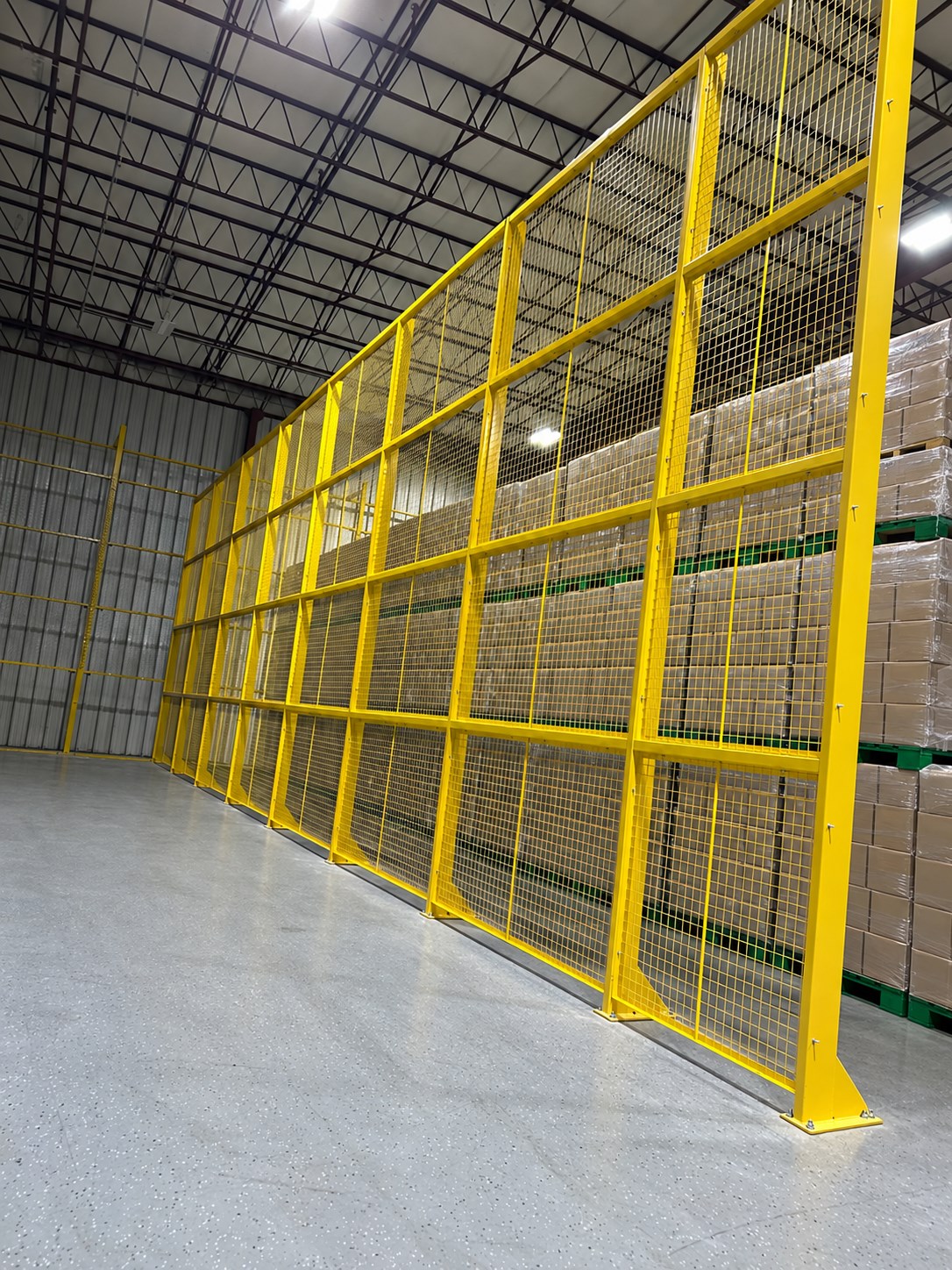
Wire Mesh vs Drywall Warehouse Partitions: Define What the Wall Must Do
Choose wire mesh or drywall warehouse partitions by the separation the space actually needs. Mesh can define a visible storage or access boundary; a drywall assembly may be appropriate where enclosure, privacy or specified performance is required. Neither material name establishes fire resistance, sound isolation or suitability for a particular operation without the complete design.
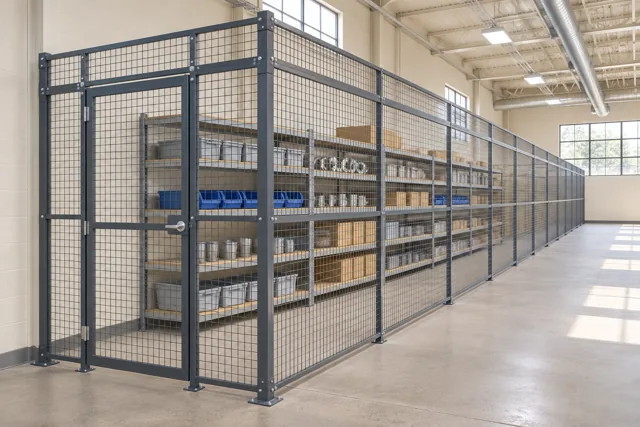
Warehouse Cage Locks: Match Gate Hardware to Access and Exit Needs
Choose a warehouse cage lock as part of the complete gate and access arrangement. Specify who enters, how someone leaves from inside, the gate type, key administration and maintenance responsibilities together. A stronger padlock does not resolve an unsuitable exit arrangement, a misaligned latch or a gate that cannot support the proposed hardware.
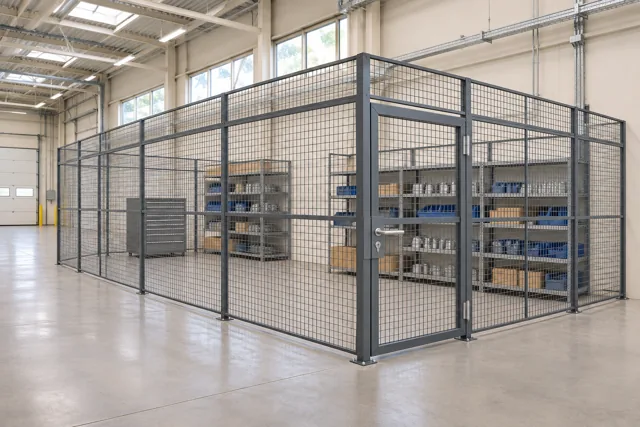
Wire-Mesh Partition Panels: Measure the Room and Clear Openings
Measure a wire-mesh enclosure as a complete arrangement of panels, posts, corners and gates. Distinguish the room dimensions, proposed outside footprint and required clear openings. A nominal panel width is not automatically the usable width between posts or the opening available through a gate.
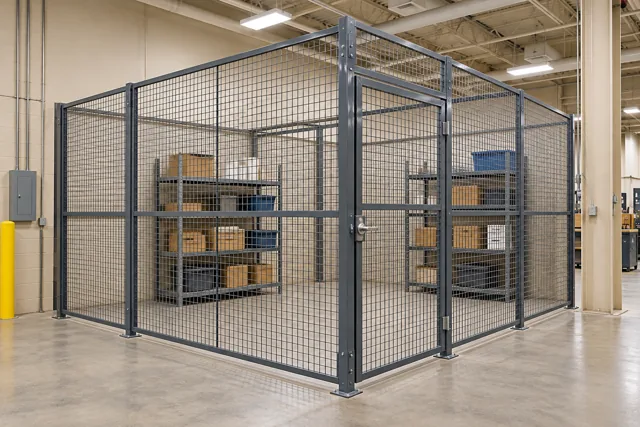
Welded Wire vs Chain-Link Partitions: Compare the Complete Enclosure
Compare welded-wire and chain-link partitions as complete enclosures, not only as two mesh patterns. Review panel construction, supporting posts, connections, gate hardware, openings and installation scope against the storage task. Neither the word “mesh” nor a material's appearance establishes a particular security rating.
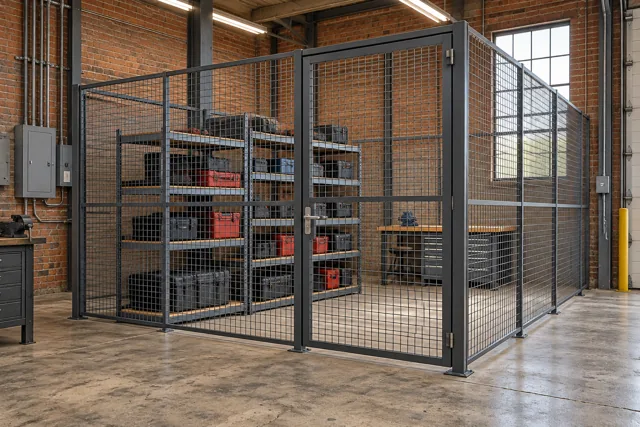
Tool Crib Inventory: Build a Clear Checkout, Return and Repair Process
A useful tool crib combines a physical access boundary with a clear record of where tools are, who has them and whether they are ready for use. Define checkout, return and repair handling before adding more shelves. A locked enclosure controls entry, but it does not by itself keep an accurate inventory.
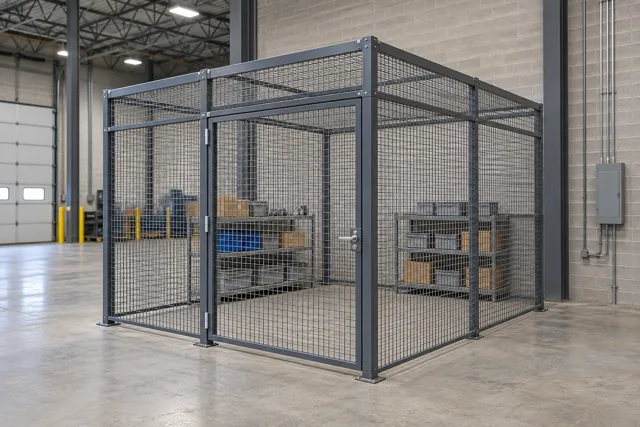
Wire-Mesh Cage Roofs: Close the Security Boundary Without Losing Service Access
A wire-mesh cage roof closes the top of an enclosure when the security boundary cannot rely on the building ceiling. Plan it with the wall panels, supports, gate, overhead services and maintenance access. A mesh roof is an enclosure component; it is not automatically a storage shelf, working platform or approval of the building's fire-protection arrangement.
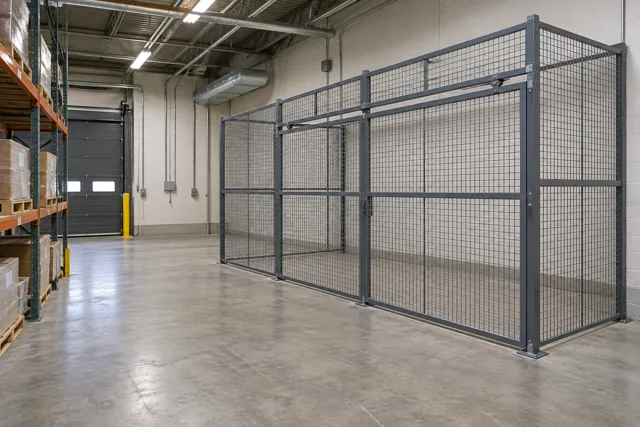
Relocating Wire-Mesh Partitions: What Can Be Reused?
Before relocating a wire-mesh partition enclosure, identify its components, assess their condition and prepare a new layout for the receiving location. Reuse depends on whether the panels, posts, gates and hardware can form a suitable approved arrangement at the new site. A bolted system should not be treated as a collection of universally interchangeable parts.
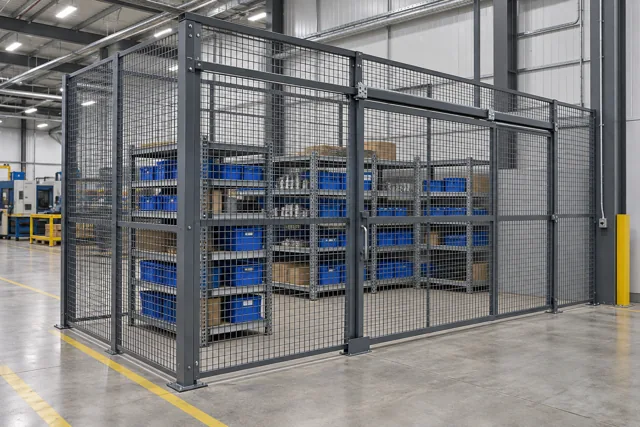
Wire-Mesh Storage Cages: Plan Access from Receiving to Retrieval
A wire-mesh storage cage should support a defined receiving and retrieval process. Plan who may enter, how incoming goods are checked, where carts wait and how items leave the enclosure. Then select the gate and internal layout around those movements. A secure boundary is easier to operate when authorized access is practical and predictable.
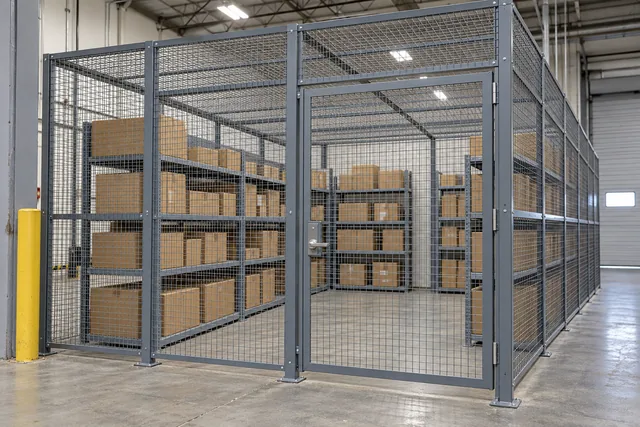
DEA Storage Cages: Define the Regulatory Scope Before Ordering
A DEA storage-cage project must begin with the applicable security requirements and the type of operation and controlled substances involved. A product called a “DEA cage” does not, by its name alone, establish compliance for a facility. The registrant and its qualified advisers need to define the required arrangement before fabrication.
© 2025 Cogan Wire and Metal Products Ltd., all rights reserved.